 Ministry of the User
3. The problem with UX/UI

A COMMAND-LINE INTERFACE (CLI) OR CONSOLE IS A UI, an API is a UI, NUIs are UIs, and VUIs are UIs. That is, a User Interface. An area where the user and the device dialogue, exchange information and (most importantly), where the user expresses their intention.
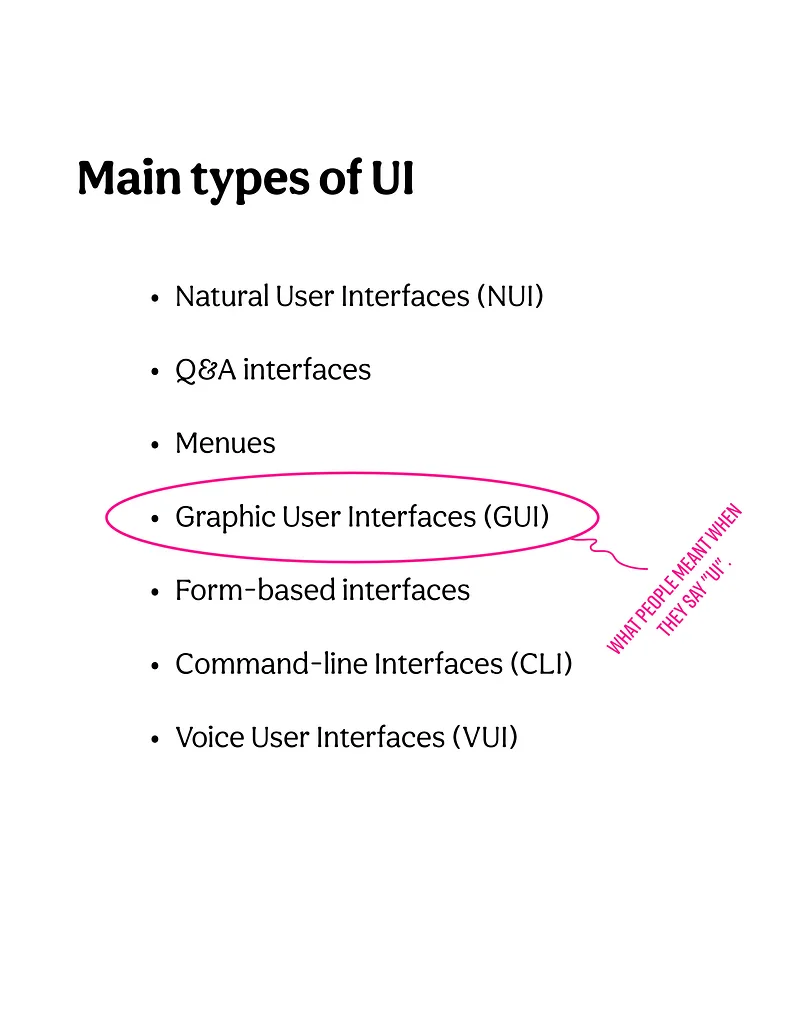
UI is not just GUI, but we use UI to refer to GUI.
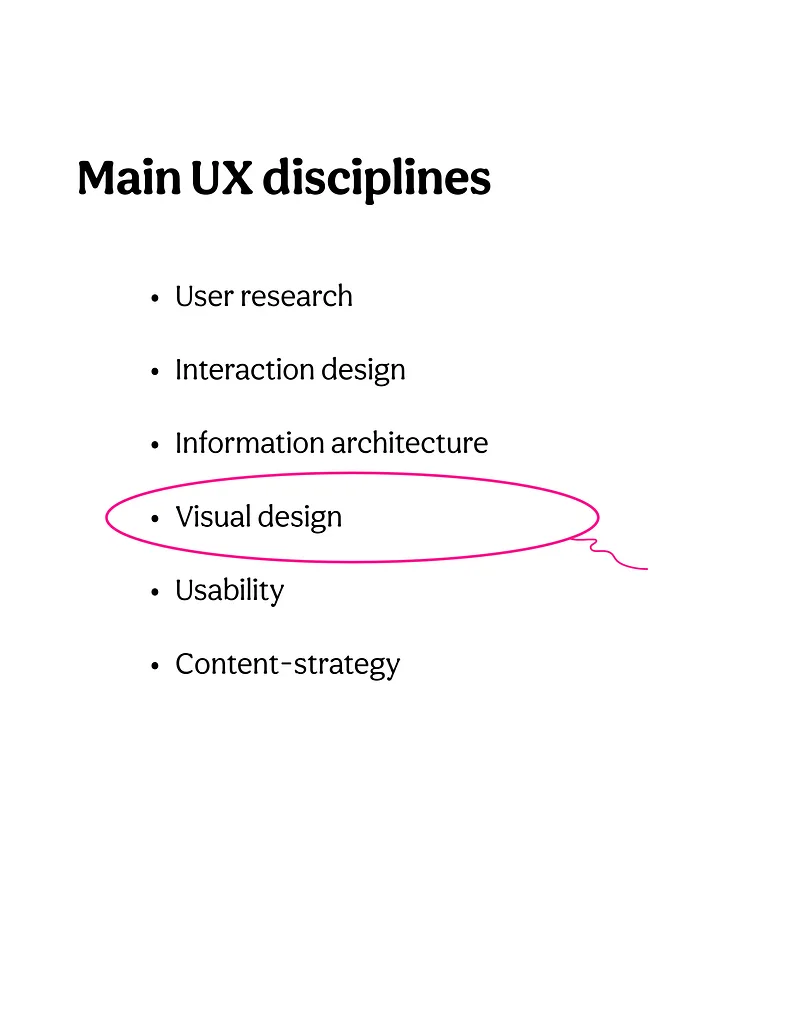
UX is not UI, UX is research, information architecture, usability, contextual survey, ethnography, participant observation, business understanding, technical feasibility, and much more.
“UX/UI” is not one thing, nor is it the other.
“UX/UI” makes UX invisible and UI invisible.
Don’t cut corners, don’t look for shortcuts.
Call a spade a spade.
It is more honest to say that you are a Web/Mobile Designer than a “UX/UI” Designer.
The reality is that, most of the time, self-defined “UX/UI” profiles focus only on UI. More specifically, in web and mobile UI.
Furthermore, these profiles usually go through training processes and work experiences that guide them to extremely standardize the creation of user interfaces. Focused solely on the latest standards and design frameworks. Emphasizing the latest trends and creating product copycats that converge to a unique way of solving complexity. We see that the web pages are indistinguishable from each other. We see the same style of stock illustrations or photographs. We see prescriptive recipes that must be applied to every website or mobile application to maximize user conversion and sustain growth-hacking techniques. That is to say: we see materialized the idea that the user experience can be industrialized, instead of being something that must be tailored for each person profile. In short, we are witnessing the invisibilization of UX.
I understand that, when reading this, you may think: “This argument is too purist” or “Deep down we are talking about similar terms” or even “We have to solve business problems and move quickly, the experience cannot be punctual.” for each user. It is better to standardize.”
I understand that you may be thinking that, because it is clear that the industry benefits from the emergence of “UX/UI” profiles and areas. If Darwin taught us anything, it is that the fittest survives, and there must be a reason for this. Isn’t it?
The reality is that organizations that do not formalize the practice of UX leave millions of dollars a year on the table to be taken by those who do invest.
It is estimated that recurring UX practice reduces rework in digital product development by up to 50%. This metric (well-known in the UX industry) is only verified when the User Centered Design process takes place: if all we do is beautify the user interface, standardize it and align it to the current canons (without investigating our users , contexts and needs), then our return will be lower, null or even negative.
In short: the field of UX is vast, varied and necessary enough to specialize in the different disciplines that comprise it.
Don’t lower its price.
Don’t lower your price.