 Ministry of the User
59. The monstrous elephant that thinks fast
“The Strange Case of Dr. Jekyll and Mr. Hyde,” written by Robert Louis Stevenson in 1886, delves into the human nature’s duality and the internal battle between good and evil. Dr. Henry Jekyll concocts a potion that transforms him into his malevolent alter ego, Mr. Edward Hyde, triggering a series of dark and tragic events.
“Thinking, Fast and Slow,” by psychologist Daniel Kahneman, published in 2011, examines the dual-process theory of human cognition, suggesting our brain operates with two distinct thought systems:
- System 1: fast, automatic, and intuitive
- System 2: slow, deliberate, and analytical
Kahneman details how these systems interact and conflict, leading to biases, heuristics, and judgment errors.
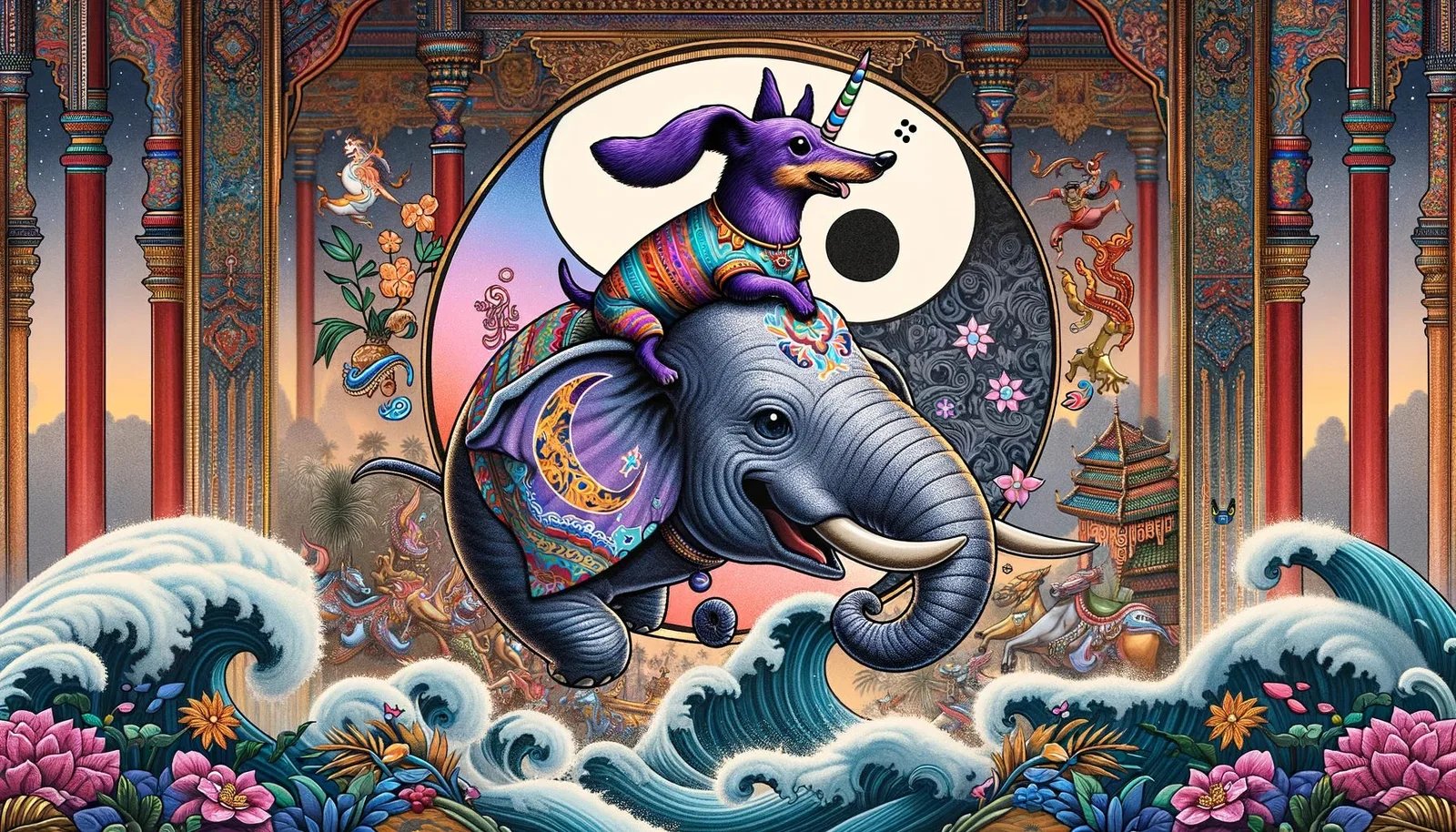
“Switch: How to Change Things When Change Is Hard,” by Chip and Dan Heath, released in 2010, offers a framework for understanding and managing change, using the metaphor of an elephant and its rider. The elephant represents our emotional and instinctual side, while the rider denotes the rational and analytical aspect. The authors argue that successful change requires aligning and balancing the needs of both the elephant and the rider.
What do we do with this?
- Accept our dual nature:
- Acknowledge both rationality and emotion.
- Be empathetic towards our own weaknesses and those of others. They exist and are present. Let’s work with them.
2. Understand:
- Foster an environment where we seek to understand the root of problems.
- Merge logic and empathy to resolve conflicts and make decisions.
3. Balance in leadership:
- Be aware of cognitive biases.
- Encourage innovation while keeping in sight the goals and reality.
4. Anticipate the unexpected:
- Prepare for irrationality in difficult situations.
- Adapt to circumstances and stay the course.
This dual aspect has been addressed for thousands of years across cultures, underscoring the concept of duality in human condition and the challenge of accepting it swiftly.
We can deceive ourselves into thinking we can change such ingrained behavior in ourselves and our team, or we can simply accept it and work with it.
- Yin and Yang (Taoism): In Chinese philosophy, Yin and Yang represent opposing yet complementary forces that interact within the universe. Yin is feminine, dark, and passive, while Yang is masculine, bright, and active.
- Angra Mainyu and Ahura Mazda (Zoroastrianism): In Zoroastrian religion, Angra Mainyu is the deity of evil and darkness, whereas Ahura Mazda symbolizes good and light, representing the eternal struggle between these opposing forces.
- Rangi and Papa (Maori Mythology): In Maori mythology from New Zealand, Rangi (the sky) and Papa (the earth) are primordial deities whose union created the world and humans, embodying the duality between the celestial and the terrestrial.
- Osiris and Seth (Egyptian Mythology): In Egyptian mythology, Osiris, the god of life and resurrection, and Seth, the god of chaos and destruction, depict the duality of order and chaos, life and death.
- Apollo and Dionysus (Greek Mythology): In Greek mythology, Apollo, the god of reason and light, and Dionysus, the god of ecstasy and emotion, symbolize the duality of logic and emotion, civilization and nature.
- Kali and Parvati (Hindu Mythology): In Hindu mythology, Kali, the goddess of destruction and chaos, and Parvati, the goddess of fertility and love, both aspects of the goddess Durga, represent the duality of life and death, creation and destruction.
- Ida and Pingala (Hinduism and Kundalini Yoga): In these spiritual traditions, Ida and Pingala are two energy channels symbolizing the duality of feminine and masculine energies in the human body.
- Coyote and Wolf (Native American Mythology): In various Native American cultures, Coyote and Wolf embody the duality of deceit and wisdom, life and death.
- Angels and Demons (Christianity, Judaism, and Islam): In these Abrahamic religions, angels and demons illustrate the duality of good and evil, light and darkness.
- Ometecuhtli and Omecihuatl (Aztec Mythology): In Aztec mythology, these two deities represent the duality of masculine and feminine, collectively creating the cosmos and other deities.
- Enkidu and Gilgamesh (Epic of Gilgamesh, Mesopotamia): Enkidu, a wild man, and Gilgamesh, a civilized king, express the duality of nature and civilization in the Sumerian Epic of Gilgamesh.
- Inanna and Ishtar (Sumerian and Akkadian Mythology): Inanna, the Sumerian goddess of love, fertility, and war, and her Akkadian counterpart, Ishtar, represent the duality of life and death, as well as destruction and fertility.
- Ve and Vili (Norse Mythology): In Norse mythology, Ve and Vili, brothers of Odin, depict the duality of life and death, creation and destruction.
- Tiamat and Marduk (Babylonian Mythology): In Babylonian mythology, Tiamat, the primordial goddess of chaos and darkness, and Marduk, the god of light and creation, symbolize the duality of chaos and order.
- Ibeji (Yoruba Mythology): In Yoruba mythology of West Africa, the Ibeji are divine twins symbolizing the duality and harmony in life and death, prosperity and adversity.
- Hoder and Balder (Norse Mythology): In Norse mythology, Hoder, the blind god of darkness, and Balder, the god of light and purity, represent the duality of light and darkness, good and evil.
- Legba and Eshu (Yoruba and Voodoo Mythology): In Yoruba and Voodoo religions, Legba and Eshu are deities that embody the duality of good and evil, life and death, and the communication between humans and spirits.
- Bes and Aken (Egyptian Mythology): In Egyptian mythology, Bes, the god of the household, and Aken, the god of the underworld, symbolize the duality of life and death.