 Ministry of the User
The Cognitive Assembly Line. Post #2. The Invisible Boss
The 19th-century factory boss used a stopwatch to optimize physical labor, but today’s “invisible boss” is an algorithm tracking cognitive effort. This shift towards predictive surveillance creates a digital panopticon where “looking busy” to appease the software becomes the primary job.
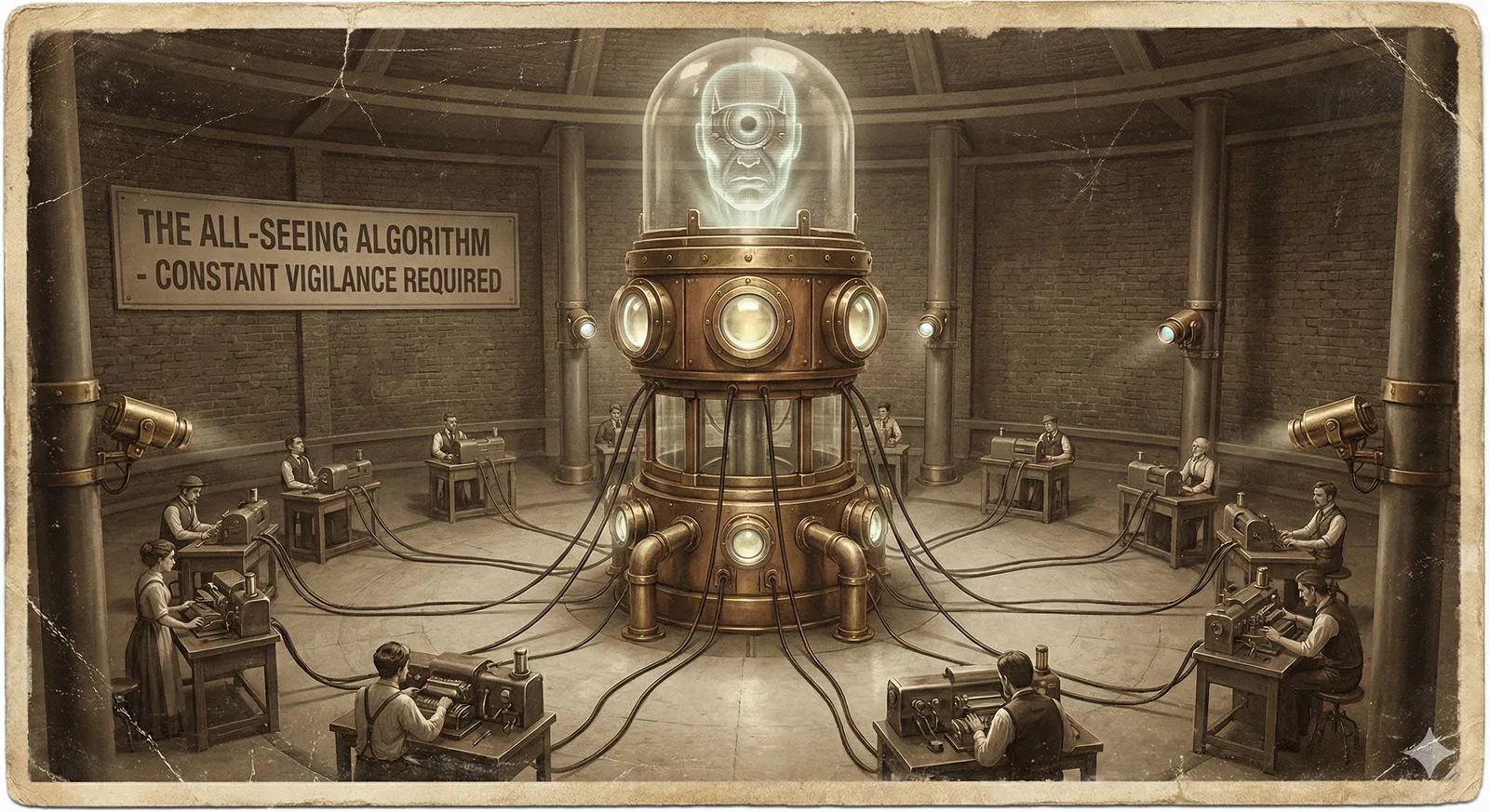
This happened during the Industrial Revolution
Factory owners employed human supervisors (often called “overlookers”) to enforce strict visual discipline, fining workers for infractions like looking out a window or being minutes late. Later, Frederick Taylor introduced “scientific management,” using stopwatches to break labor down into tiny, timed movements, removing all bodily autonomy to ensure no second was wasted on “inefficient” human quirks.
This happens now
“Bossware” has replaced the stopwatch. A report by the Trades Union Congress (TUC) highlights how AI-driven tools now monitor not just tasks, but sentiment and tone in messages, often “predicting” worker behavior or flagging “potential disengagement” before it happens, creating a surveillance environment workers describe as “dehumanizing.”
(Source: TUC Report “Technology Managing People,” 2021/2022)
This is why this is important
This marks the rise of “Predictive Control,” where workers are judged not just for what they do, but for what the data suggests they might do. The 19th-century boss punished you for a visible mistake; the AI boss punishes you for a statistical probability. This forces employees into “performative productivity” — jiggling mouse cursors or sending unnecessary emails — to appease an opaque algorithm rather than focusing on meaningful results.